
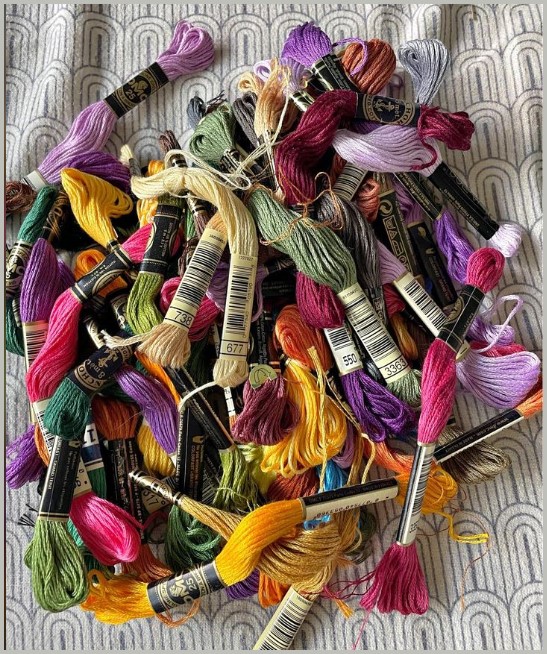
Whether you’re a cross stitcher, an embroiderer, or a bit of both, you’ve probably noticed that DMC floss costs more than it used to. There have been several price increases over the past few years, and when you’re kitting up a larger project or trying to build a colour collection from scratch, those increases add up. DMC isn’t the only option. If you’re looking for an embroidery floss alternative that can save you money without ruining your finished piece, there are several worth knowing about.
The trick is knowing which ones work, when to use them, and when it’s worth sticking with DMC.
CXC: the budget option that uses DMC’s numbering
CXC is a brand of embroidery thread manufactured in China. The thing that makes it interesting is that it uses the same colour numbering system as DMC. If your pattern calls for DMC 310, you grab CXC 310. No conversion chart, no guessing.
The price difference is significant. Depending on where you buy, a full set of CXC colours can cost a fraction of what the equivalent DMC set would run you. Even buying individual skeins, the savings are substantial, especially on full-coverage cross stitch projects or embroidery pieces that need dozens of colours. If you’re curious just how much a full DMC collection actually costs, we broke down the real numbers here.
CXC is most commonly available through AliExpress, and some Etsy sellers carry it too. Availability varies by region, so you may need to allow for shipping time.
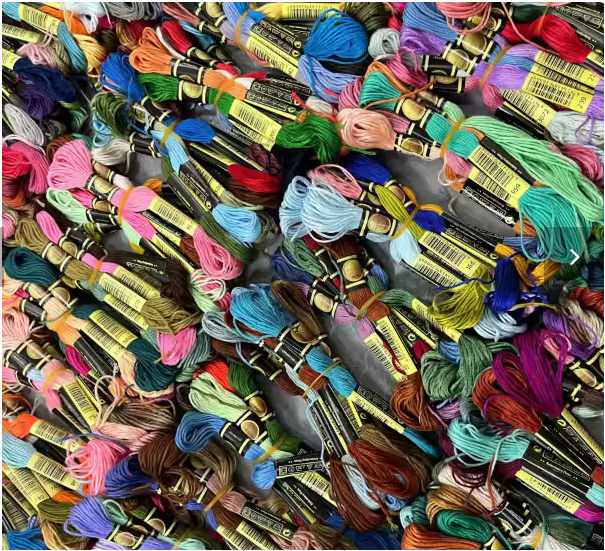
CXC covers 447 colours, which matches DMC’s standard solid range. The newer DMC colours numbered 01-35 aren’t available in CXC. Some stitchers use a brand called AMO to fill that gap, as it covers those missing numbers and is designed to work alongside CXC. We haven’t tried AMO ourselves, so we can’t speak to the quality, but it’s worth knowing it exists if your pattern calls for those newer shades.
When buying from AliExpress (which is where you will mostly find CXC at the price points we’re talking about in this post), make sure you’re getting actual CXC-branded thread, not generic unbranded floss.
The same factory produces a lower-tier line called Rosace, which is what you’ll often get in cheap random bundles. Look for ‘CXC’ on the label and check the barcode starts with 69 (China). Searching for ‘CXC two labels’ will get you the most recent production run.
How does it stitch?
We want to be upfront: we haven’t personally stitched with CXC (though we’ve just bought a set so will post about that later). Sandy started collecting DMC more than 30 years ago, so that’s what fills our floss books. But we’ve looked closely at what experienced stitchers consistently report, and the picture is fairly clear.
CXC is a poly-cotton blend, while DMC is 100% Egyptian cotton. In practice, word is that CXC feels slightly softer and thicker, and it doesn’t have quite the same sheen as DMC.
Side by side, you can see the difference. On its own, it looks lovely.
The colours are close to DMC but not identical. For a project stitched entirely in CXC, this isn’t a problem. Mixing CXC and DMC on the same piece is where you might notice a shift, so it’s best to pick one brand per project.
Some stitchers find CXC knots a bit more than DMC. Good technique helps: shorter thread lengths, letting your needle dangle to untwist regularly, railroading. It’s worth knowing upfront so it doesn’t catch you off guard.
On the plus side, polyester tends to hold colour well. Several stitchers have tested CXC for colour bleeding (even with reds, which are notorious) and reported good results. Fading over time may actually be less of a concern with a poly-cotton blend than with pure cotton.
Worth noting: some AliExpress listings describe CXC as 100% cotton, but the consistent finding from stitchers who’ve tested it is that it’s a poly-cotton blend. It’s one of those things to be aware of when buying through marketplace platforms where product descriptions aren’t always accurate.
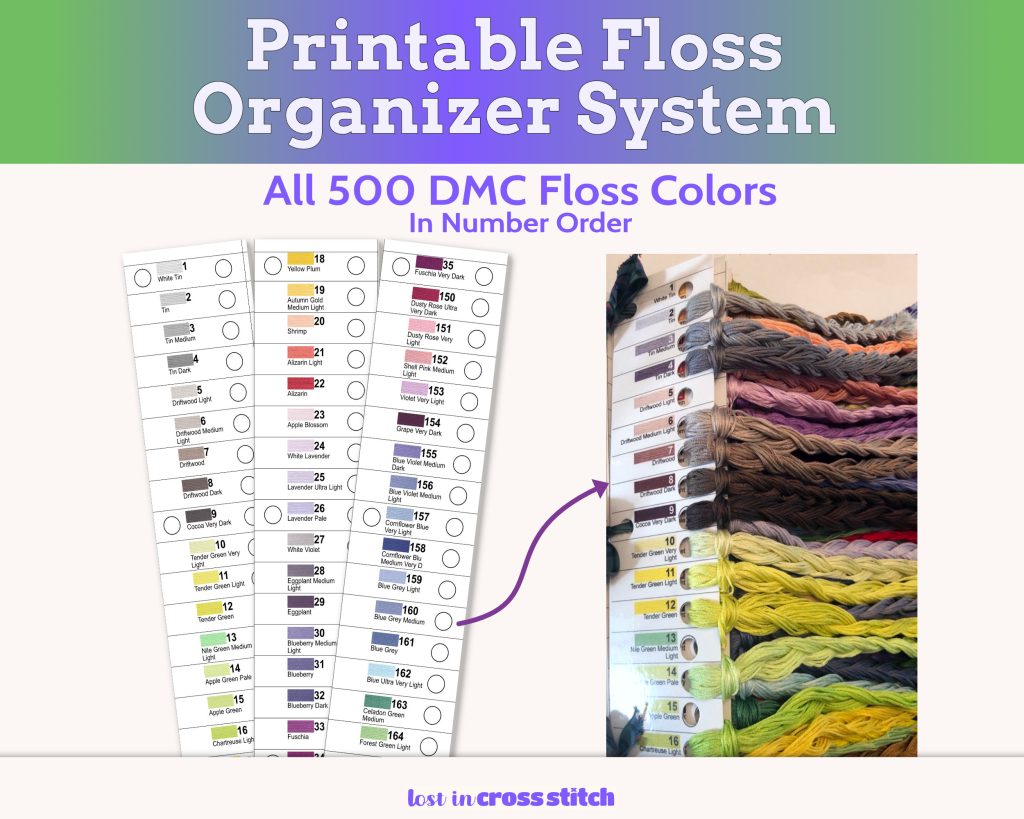
Whether you settle on CWC or DMC, you’ll still want a way to keep it all in order. Our printable floss organizer cards work for both.
Anchor: a quality alternative with its own colour range
Anchor has been around almost as long as DMC. It’s manufactured in Germany, offers around 460 colours, and is 100% Egyptian cotton with double mercerisation, so the quality is well established.
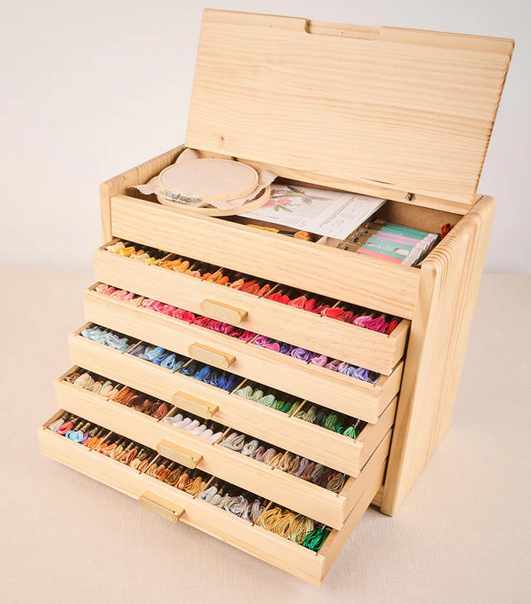
We’ve used Anchor’s variegated floss over the years because the colours are stunning and the stitching experience is really smooth. It’s a brand we’d happily recommend for any project, whether that’s cross stitch, embroidery, or a mix of techniques.
The main thing to know is that Anchor uses its own numbering system. If your pattern is charted for DMC, you’ll need a conversion chart. They’re easy enough to find online, but it’s an extra step compared to CXC’s direct numbering match.
Anchor is generally more expensive than CXC but can be cheaper than DMC depending on where you are and where you shop. Availability varies by country. It tends to be more common in the UK and parts of Europe than in North America.
One thing worth noting: DMC acquired Anchor in 2023, so both brands are now under the same parent company. So far (in 2026), Anchor continues as a separate product line with its own colours and numbering, but it’s something to be aware of, because pricing and availability could change over time.
Cosmo: the premium alternative
Cosmo, made by Lecien in Japan, offers 501 colours made from extra-long staple Egyptian cotton, so has a beautiful lustre. Stitchers who’ve tried it say the texture and sheen is lovely.
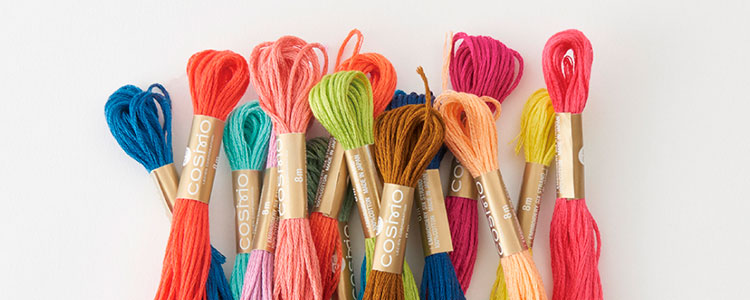
Cosmo is available in North America, Europe, Australia, and parts of Asia, though it’s not always easy to find locally. Like Anchor, it uses its own numbering system, so you’ll need a conversion chart for DMC-charted patterns.
Cosmo sits at a similar price point to DMC (sometimes higher), so it’s less of a budget play and more of a “different quality experience” option.
If you enjoy trying new threads and you spot it in a local shop or online, it could be worth picking up a few skeins to test.
Sullivans
Sullivans is another option you might come across.
It’s 100% cotton, and each skein’s label also has the closest DMC equivalent, which makes substitution straightforward.
Quality reviews are mixed, with some stitchers reporting colour variance, so it’s worth testing a few skeins before committing to a project.
When embroidery floss alternatives make sense (and when to stick with DMC)
You don’t have to be a one-brand stitcher. It’s perfectly fine to use different floss for different projects depending on what you’re making and how you want the finished piece to look and feel.
A budget alternative like CXC works well for practice pieces and learning new techniques, personal projects you’re stitching or embroidering for the enjoyment of it, smaller or quicker designs where you want to keep costs low, and full-coverage pieces where the sheer volume of floss needed could make DMC pricing hard to justify.
For pieces you’re planning to pass down or display for years, gifts where you want that extra-polished finish, or projects where you’re already using DMC floss, it makes sense to invest in what you trust.
There’s no wrong answer. It’s about matching the floss to the project and your budget.
Keeping track when you’re using more than one brand
If you’re using different brands across different projects, staying organised matters more than ever. Labelling your cards or bobbins clearly and tracking what you own saves you from buying duplicates or accidentally mixing brands mid-project.
If you don’t already have a system, our embroidery floss organisation guide walks through the basics of getting your stash under control. And because CXC uses the same numbering as DMC, our mini thread tracker works for both brands. You can carry it in your project bag and check what you have before you buy.

Worth trying, not worth stressing over
Choosing embroidery floss alternative brands doesn’t have to be a high-stakes decision. If the cost of DMC is making you put off a project, or if you’re just starting out and the idea of building a full collection feels overwhelming, there are real options that will let you keep stitching.
Pick up a few skeins of something new, test them on a small piece, see how they feel in your hands. That’s all it takes.
And if you’re looking for more ways to stretch your stitching budget, our budget cross stitch tips post has plenty of ideas that have saved us over the years.
Frequently Asked Questions
Does CXC have all the DMC colours?
CXC covers 447 colours, matching DMC’s standard solid range (colours 150-3866, plus Blanc, Ecru, and B5200). The newer DMC colours numbered 01-35 are not available in CXC (at time of writing, early 20206). Some stitchers use a brand called AMO to fill that gap.
We haven’t tried AMO ourselves, so we can’t vouch for it, but it’s worth knowing about if your pattern calls for those newer shades.
Is CXC floss the same as DMC?
No. CXC is a separate brand manufactured in China. It uses the same colour numbering system as DMC, which makes it easy to substitute, but the thread itself is different. CXC is a poly-cotton blend rather than 100% cotton, and the sheen and texture are slightly different.
The colours are close but not identical, so it’s best to avoid mixing both brands on the same project.
Can you mix CXC and DMC floss on the same project?
It’s not recommended. While the colour numbers match, there are subtle differences in shade, thickness, and sheen between the two brands. These differences can be visible when stitched side by side.
For the best results, stick with one brand per project.
What is the cheapest alternative to DMC embroidery floss?
CXC is currently the most affordable widely available alternative. A full set of CXC colours costs a fraction of the equivalent DMC set, and individual skeins are significantly cheaper. It’s available through AliExpress and some Etsy sellers.
Anchor and Cosmo are other alternatives, though they sit closer to DMC in price.
Do DMC floss organisers and trackers work for CXC?
Yes. Because CXC uses the same numbering system as DMC, any organiser or tracker built around DMC numbers works for CXC too. Our mini thread tracker is designed around DMC numbering, which means it’s just as useful if you’re building a CXC collection.
Is CXC floss colourfast?
Multiple stitchers have tested CXC for colour bleeding, including with notoriously tricky reds, and reported good results.
As with any floss, it’s a good idea to test a small swatch before washing a finished piece, especially for darker or more vibrant colours.



Leave a Reply