
A cross stitch project bag doesn’t need to be fancy, expensive, or purpose-made. Its job is simple: keep everything for one project together so you can pick it up and stitch.
If you’ve already started using a cross stitch project kit, the project bag is just the container. It supports the system, but it isn’t the system itself.
What’s in This Post
Table of Contents
What We Mean by a “Project Bag”
A project bag is something that holds one active project and stays with it while you’re stitching.
It might be:
- a fabric bag
- a zip-lock bag
- a pencil case
- a document wallet
- a basket, box, or binder
- something repurposed from another use
It actually doesn’t matter what the project ‘bag’ looks like. What does matter is that everything for one project lives together, for the life of that project.
Your pattern belongs in there too. There’s more on that in our guide to cross stitch patterns for beginners.
Cross Stitch Project Bag vs Storage Tote: Why the Difference Matters
It helps to separate these two ideas, because they solve different problems.
A project bag:
- holds one project
- opens and closes easily
- is accessed often
- moves with you while you stitch
- holds multiple projects or supplies
- is opened less frequently
- is meant for longer-term storage
Neither is better than the other. They just do different jobs. Most stitchers use both without really thinking about it.
What Actually Makes a Good Project Bag
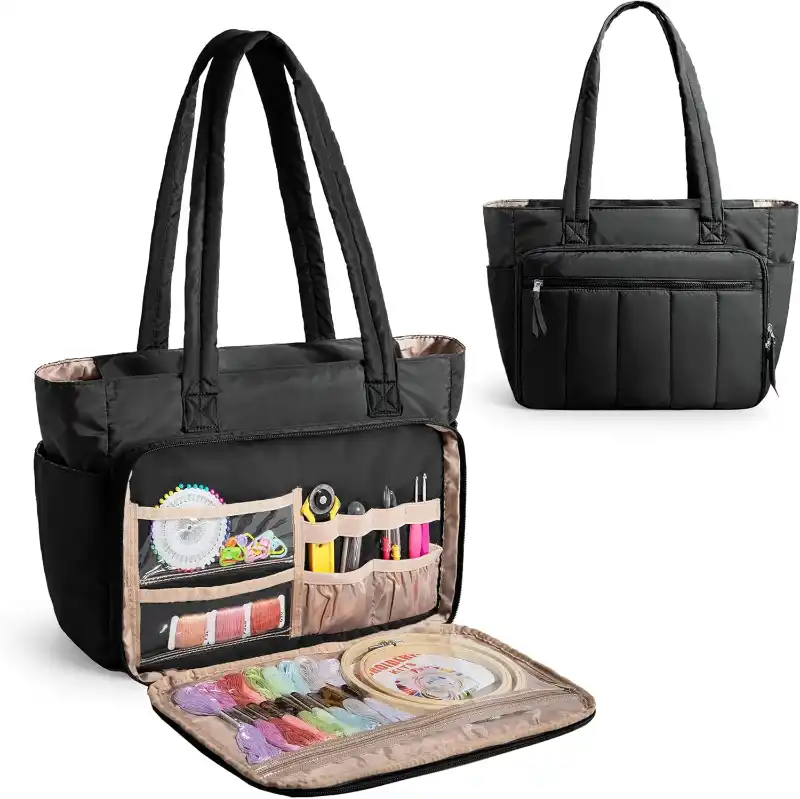
A good project bag is one that works with how you stitch. In practice, that usually means:
- it’s the right size for your project
- it closes securely so that small items don’t fall out, or undesirable items don’t find their way in.
- it keeps small tools from drifting to the bottom
- it protects your fabric
Pockets can be helpful for things like needles, snips, and threaders, especially if you don’t want those loose in the bag. Easy-open closures matter too, because you’ll be opening and closing the bag often.
Waterproof, Not Waterproof, or Somewhere in Between
Most project bags aren’t waterproof, and that’s fine.
Fabric bags are common and work well for everyday stitching. At the same time, spills happen. Coffee gets knocked over. Bags get put down in places you didn’t plan for.
Many stitchers (including me) use:
- a fabric project bag on the outside
- a small zip-lock or inner sleeve around the fabric (and maybe floss) inside
That way your project gets some protection without needing a fully waterproof bag. Waterproof linings or vinyl panels can be a bonus, but they’re not strictly needed.
Why Being Able to See Your Project Helps
When you can see what’s inside your cross stitch project bag, even briefly, it’s easier to remember:
- what the project is
- where you’re up to
- why you were enjoying it
- why you want to finish it!
It might just be my ADHD brain (out of sight, out of mind) but a bag with mesh panels or vinyl windows, or completely made of see-through material, can really help. Being able to glance at the bag and recognize the project can make it easier to come back to it, especially if you have more than one project on the go. (Who, me?)
Keeping Your Project Visible Without a See-Through Bag
If your project bag isn’t see-through, you can still make the project visible in other ways.
This is where Project Bag Cards come in.
A Project Bag Card can:
- slip into a small vinyl pocket on the outside of the bag, so you can see the project details without opening it
- live inside the bag and be pulled out on its own, without unpacking the whole project.
Having the project name, fabric, and key details on a card gives you a quick reminder of what’s inside the bag. It helps you reconnect with the project without handling the fabric or the floss every time.
This kind of visibility works well alongside tools like Project Floss Organization Cards, where the physical parts of the project are already kept together.
You Don’t Need the Perfect Bag to Get Started
It’s easy to get excited about a new project and skip over the planning side of things.
You don’t need the perfect cross stitch project bag to start using one. A “good enough” bag works just fine. You can always change or upgrade later if you find something isn’t working for you.
What matters most is the habit of keeping the project contained so that you can make the most of your precious stitching time.
How Project Bags Support Project Kits
A project bag works best when it holds a complete kit of everything you need for your project.
When your floss, fabric, pattern, and tools stay together:
- nothing gets lost between sessions
- you don’t have to reassemble things each time
- it’s easier to pick the project back up after a break
That’s why project bags and [cross stitch project kits] work so well together. The kit is the system. The bag supports it.
Using Cross Stitch Project Bags at Home and Away
Most stitchers naturally use different projects in different places.
Larger projects often stay at home. Smaller projects are easier to take with you. When you’re stitching away from home, secure closures and fabric protection matter more, and simple setups usually work best.
Even with large, home-based projects, a small bag tied to the side of a frame can keep floss, snips, and patterns together and easy to reach.
A Simple Habit That Makes Stitching Easier
A project bag isn’t about buying the right thing. It’s about giving your project a home.
When your project is contained, visible, and easy to access, stitching feels simpler. You spend less time setting up and more time doing the part you actually enjoy.
If your project bag helps you pick up your stitching and get started, it’s doing exactly what it needs to do.



Leave a Reply