
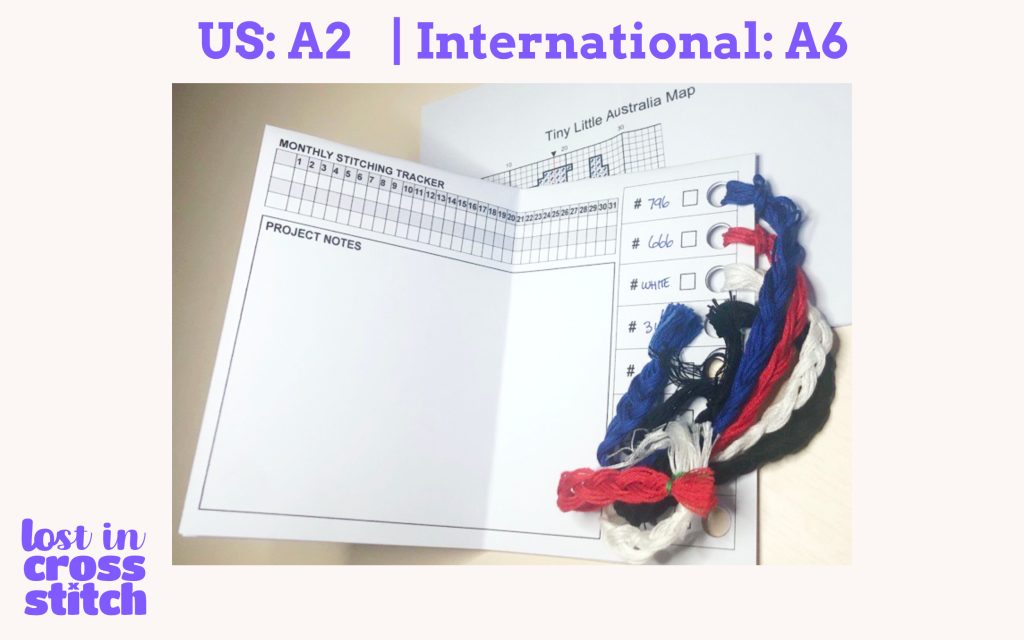
A cross stitch project kit can make a real difference when your projects, patterns, and supplies are scattered across different places. When everything for one project lives together, you spend less time setting up and more time stitching. Your floss is ready, your pattern is there, and you can sit down and get straight into the part you actually enjoy.
Creating a kit for each project doesn’t add work to your stitching. It removes friction. Over time, that gives you more chances to get lost in cross stitch, with all the calm and focus that comes with it.
When Your Projects and Supplies Are Scattered, Stitching Gets Harder
Stitching is meant to be absorbing and relaxing, but it can start to feel oddly effortful when things aren’t where you expect them to be. Even when you know what you want to work on, small interruptions creep in.
You might find yourself:
- deciding which project to stitch
- checking whether you already have the right floss
- trying to remember where you left off
- digging through bags or boxes for tools
None of this is difficult on its own, but it quietly eats into your stitching time. This kind of time suck happens once you have more than one project on the go, or a growing stash of supplies.
What a Cross Stitch Project Kit Actually Is
Like a kit you buy from a retailer, you can make your own kit that has everything you need for one project, kept together as a set.
That usually includes:
- your pattern
- your fabric
- the floss for that project
- scissors or snips
- a needle and needle minder
- a frame or hoop
- anything else you like to use while stitching, perhaps a magnet board and magnet strips to keep track of your pattern.
The important part is that the kit stays together. When you pick it up, you’re not collecting pieces from different places. You’re opening one kit and stitching. A project bag can help you here too.
There’s more on keeping your pattern with your kit in our guide to cross stitch patterns for beginners.
Why Making a Kit Saves You Time Every Time You Stitch
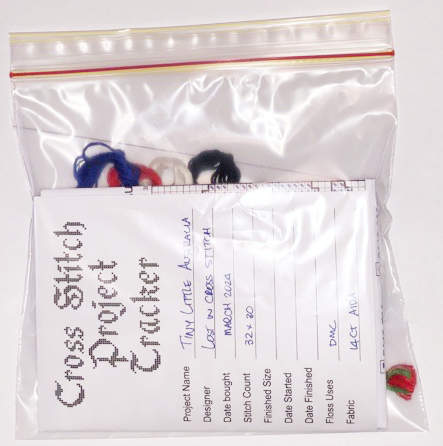
When your project is already kitted up:
- you don’t spend time deciding what to work on
- you don’t stop mid-session to look for floss or tools
- you can pick the project back up easily after a break
- your stitching time stays focused.
This is one of the best ways we’ve found to get more time to cross stitch. You’re just protecting the time you already have.
Preparing Your Floss Once Is the Real Time Saver
The biggest time saver in a project kit is prepared floss. By this we mean floss that is pre-cut into the right lengths, and stored in a way that lets you pull out just one or two strands.
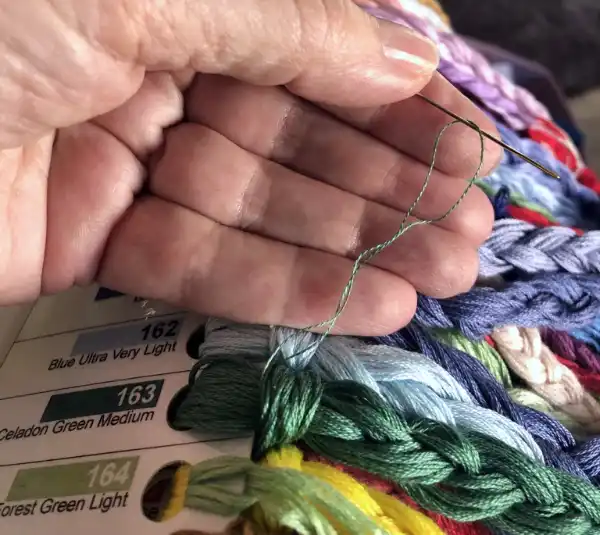
When you prepare your floss at the start of a project, you do the work once:
- you cut the skein into usable lengths
- you separate strands if needed
- you attach those lengths to the project
After that, stitching is fast. You pull a strand, thread your needle, and keep going. You’re not unwinding skeins, cutting thread mid-session, or dealing with leftover bits (floss orphans) you’re not sure what to do with and that end up in your OORT jar or the bin!
This is a do-once job that pays you back over months of stitching and over the life of the skein itself. This approach grows naturally out of long-term floss organizer systems, where preparing floss upfront saves time again and again.
Why Project Floss Organization Cards Tie the Whole Kit Together
When you’re at the stage in your stitching life that you’re doing multiple projects (several works-in-progress are normal), this way of work is such a time saver.
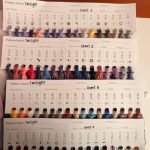
A Project Floss Organization Card holds just the floss for one project. All your colors are visible at once, fixed in place, and easy to grab. The card lives with your project kit, so your floss never drifts away from the project it belongs to.
I always write the project name and floss numbers on the card. Dates are useful too, especially when time has a way of slipping by. Writing down the fabric helps if things ever get separated. Everything else on the card is optional. You fill in what helps you and ignore the rest.
Because the cards come in different sizes, you can choose one that suits the number of colors in your project, whether you’re working with three colors or thirty.
Choosing the Right Card Size for Your Project
You usually know how many colors a project has before you start, so choosing a card is straightforward. Larger projects use larger cards. Smaller projects work well with any size, including the fold-up card.
Cards can be reused too. You can use the back for a new project, use pencil for initial markup, or repurpose it for stitch-alongs. They’re designed to be part of your stitching cycle, not something you throw away. The different formats live alongside other printable tools for planning and stitching.
Why This Works From Your First Project Onward
This way of kitting projects works no matter where you are in your stitching.
If you’re new to cross stitch, it helps you start with useful habits. Your floss doesn’t tangle. Nothing drops loose into the bottom of a bag. Everything stays together. Over time, those habits make stitching feel easier and more enjoyable, which is why many beginners appreciate simple systems like this when learning cross stitch basics.
If you’ve been stitching for years, kits make it easier to manage multiple projects without mixing things up. You always know which floss belongs where, which is helpful if you rotate projects or stitch away from home.
Using Project Kits for Travel, Gifts, and Stitch-Alongs
Project kits are ideal for stitching away from home. You grab one kit and go, knowing everything you need is already there.
They also work well for stitch-alongs. You can reuse a card from month to month, turning it over or updating it as the new design is released. If the SAL is well designed, you’ll be using the same colour set for every pattern so you might only kit up once for the duration.
Kits also make thoughtful gifts. If you’re giving a chart to another stitcher, you can turn it into a complete kit by adding fabric, floss, and a Project Floss Organization Card.
The fold-up card was designed with small projects and travel designs in mind, making it a natural fit for gifting and portable stitching.
What Happens When a Project Is Finished
When you finish your project, any remaining floss goes back into your master set. The card goes back into your stitching box, ready to be reused. We generally get at least four uses out of each card before they get too tatty.
But mainly, you’re not left with any “just in case” floss scraps, and nothing gets lost between projects.
A Simpler Way to Protect Your Stitching Time
Creating a cross stitch project kit doesn’t change how you stitch. It changes how easy it is to start.
When your floss is prepared, your tools are together, and your project is ready to go, you spend less time setting up and more time stitching. This is our favourite thing – more time to get lost in cross stitch :)
If keeping your projects contained sounds appealing, Project Floss Organization Cards support exactly this way of stitching, both practical and quick.


Leave a Reply